Utensil Identification Challenge
Reviews
This quiz stands out for its patient, no-pressure design. The visual recognition format works well for both children and adults, and the gradual introduction of less common tools keeps the challenge interesting. The lack of time limits or scoring pressure makes it a refreshing break from competitive games. It is a practical tool for anyone wanting to become more familiar with kitchen equipment terminology.
About this game
Visual Recognition Mechanics
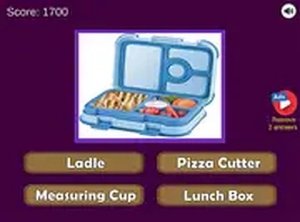
Each round shows a high-quality photograph of a single kitchen item, ranging from common spoons to less familiar gadgets like zesters. Players see four possible names and must select the one that matches the image. The interface provides immediate feedback, highlighting correct answers and gently noting mistakes without pressure. This straightforward loop makes the experience accessible to young learners and adults alike.
Vocabulary Expansion Approach
The game introduces terms in a logical sequence, starting with widely known utensils and gradually including specialized tools. This method helps players build a mental library of kitchen-related words. Repeating items across sessions reinforces retention, turning casual play into a practical learning exercise. The content is curated to avoid overly obscure terms, keeping the challenge fair.
Difficulty Progression Design
Early rounds feature tools like forks and measuring cups, which most people recognize instantly. As players advance, the game presents items such as mandolines and pastry brushes, requiring closer observation. This gradual increase in complexity maintains engagement without causing frustration. The system tracks progress, so returning players encounter a mix of familiar and new items.
Cross-Platform Accessibility
The quiz runs entirely in a web browser, requiring no downloads or installations. It adapts to different screen sizes, functioning smoothly on phones, tablets, and desktop computers. Touch and mouse inputs are both supported, allowing play on any device. This flexibility makes it easy to use during short breaks or in group settings like classrooms.
Family-Friendly Learning Environment
All content is suitable for children and adults, with no time limits or competitive pressure. The interface uses calm colors and simple text, reducing distractions. Mistakes are treated as learning opportunities rather than failures, encouraging repeated play. This design makes the game a useful resource for parents teaching household vocabulary or for anyone curious about cooking tools.







Comments
0 comments